Current Job: Director of Communications and Fundraising at the Bat Conservation Trust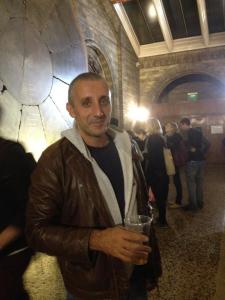
Scientific Discipline/Field: Ecology and Conservation Biology
Country: UK
Pick some letters (L,G,B,T,Q etc.): G
Website: https://uk.linkedin.com/in/jose-nuñez-miño-9838a717
What does your job involve?
I am part of the Senior Management Team for a small charity. I direct and manage Bat Conservation Trust’s (BCT’s) communications, fundraising, outreach and engagement strategy and delivery. A central part of my role is to promote BCT’s authority as the UK’s leading non governmental organization on bats and a key European and international leader. My job involves a lot of liaising within the charity and externally with different people and organisations. In summary: raising funds bat conservation and, more broadly, awareness of the importance and value of bats.
How did you get to this job (education etc.)?
I did not take a “traditional” route to my current post. Although my first degree at the University of Westminster had an ecology focus I entered the world of IT after I finished. That lasted for 10 years during which I continued to be involved and volunteered with several different wildlife conservation charities including a London based LGBT conservation group.
I then re-entered the academic world. Initially I did a part-time MSc in Environmental Science at Birkbeck College, followed by a full time MSc in Forest Protection and Conservation at Imperial College. This was followed by taking up a PhD in Tropical Ecology at the University of Oxford while simultaneously working as the Senior Biodiversity Coordinator for a research tourism organisation (Operation Wallacea).
After completing my doctorate, I project managed research and conservation projects for Durrell Wildlife Trust and then TRAFFIC (the wildlife trade monitoring network). It was during this time that I realised that there is a real need to have far more effective communications and fundraising strategies in conservation which lead me to the job I have today. Most of my research has focused on a range of undervalued and misunderstood species, bats fits neatly into this category.
Do you feel being LGBT has affected your career decisions?
To some degree, yes. I was not aware of any LGBT role models within the ecology or conservation sector when I first graduated which made me exit the field on a professional capacity. When I did return, it was driven by a passion for conservation but there was still very little support for anyone from the LGBT community. My work in countries where xenophobia was enshrined in culture and law was not easy and being open about my sexuality in these places was often difficult and potentially dangerous.
Have you had any reactions from colleagues about being LGBT, either good or bad?
Yes, both. More often than not LGBT issues are simply ignored, some people either don’t want to talk about it or see it as irrelevant to the job at hand. I have had to deal with some difficult situations where remaining silent/invisible would have been the easiest thing to do. Latent homophobia is probably one of the hardest things I have had to challenge. It must be said, that I have also found some incredibly supportive colleagues and friends within my chosen field.
Did you have any role models growing up (LGBT, STEM, totally unrelated…)?
What are your plans for the future?
I think its critically important to broaden the appeal of conservation to a much wider audience than is currently engaged with it. I aim to continue working towards making more people aware of the relevance that protecting our wildlife and environment has to us all.
Anything else you’d like to add?
As someone from the working class and the son of immigrants, I have been very fortunate, along with a lot of hard work, to get where I am today. I think it’s vital that we give opportunities to everyone to make the best of their lives. My recent involvement with the British Ecological Society Equality and Diversity Workgroup is part of my contribution to make this happen. In a world that is increasingly looking more unequal and divided it is critically important that we speak up so people don’t feel trapped by who they are and their circumstances.
 LGBTQ+ STEM
Leave a comment